
Digital Discipleship
Randy Stone • February 5, 2026
Digital Discipleship: Making Disciples in a Connected World
Digital Discipleship: Making Disciples in a Connected World
The world has gone digital—and so has discipleship.
From smartphones to livestreams, every believer carries a pocket-sized mission field. Yet many churches still treat online ministry as an optional add-on rather than a core avenue for disciple-making.
The Great Commission didn’t include a technology clause. Jesus said, “Go and make disciples of all nations” (Matthew 28:19). In our day, “going” often begins with logging in.
________________________________________
1. The Digital Shift: From Attendance to Engagement
For generations, churches measured discipleship by attendance. Now, digital culture measures it by engagement—interaction, conversation, and application.
People no longer wait for Sunday to learn, connect, or grow. They scroll, watch, listen, and respond throughout the week.
“The digital world is not a distraction from discipleship—it’s a destination for it.”
Churches that resist digital engagement risk losing connection with a generation that lives online. But churches that embrace it can disciple people daily, not just weekly.
2. The Biblical Model: Presence Beyond Place
Throughout Scripture, God meets people where they are.
Jesus taught from boats, mountainsides, and dinner tables. Paul wrote letters that carried teaching across cities and centuries. Technology has always extended presence beyond proximity.
Today’s digital tools—live video, podcasts, texts, social media—are the new letters of Paul. They connect believers across distance and time. When used with wisdom and purpose, they become instruments of spiritual formation.
“If Paul had Wi-Fi, he would have used it for the gospel.”
3. What Digital Discipleship Is (and Isn’t)
Digital discipleship is not replacing face-to-face ministry. It’s expanding the reach of authentic relationships through modern channels.
It’s not about building followers; it’s about forming disciples.
Digital discipleship is:
• Intentional spiritual growth in online spaces
• Relational, not transactional
• Rooted in community and accountability
• Guided by Scripture and Spirit
• Designed to move people from connection to commitment
When digital tools amplify biblical principles—teaching, fellowship, prayer, and mission—they extend the local church into a global field.
4. The Advantages of Digital Discipleship
a. Accessibility
Anyone with a smartphone can join a Bible study, watch a sermon, or participate in a prayer group—from anywhere in the world.
b. Consistency
Digital tools keep discipleship flowing throughout the week—through devotionals, podcasts, video calls, and group chats that reinforce spiritual habits.
c. Personalization
Algorithms may track behavior, but the church can track spiritual growth—using digital tools to tailor content and connect people to next steps.
d. Multiplication
When disciples share digital content, they multiply reach instantly. One post can become a pulpit; one comment can become a conversation that leads to Christ.
“The gospel is still word of mouth—it just travels through Wi-Fi now.”
5. The Dangers: When Digital Replaces Discipleship
Digital discipleship must serve the mission, not replace it.
Online connection can’t substitute for embodied community, accountability, and service. The danger lies in content without connection—information without transformation.
Healthy churches use digital tools to:
• Invite people into real relationships
• Reinforce, not replace, face-to-face fellowship
• Guide engagement toward in-person community and service
The goal is hybrid, not hollow. Real discipleship still requires life-on-life investment.
6. How Churches Can Begin
Step 1: Define Purpose
Ask, “How does our digital presence make disciples?” Every post, podcast, or livestream should align with a discipleship outcome.
Step 2: Empower Digital Missionaries
Equip members to use their online platforms to share faith stories, invite others, and encourage growth.
Step 3: Build Online Pathways
Move people from curiosity to connection—offer follow-up links, prayer forms, and group invitations.
Step 4: Create Consistent Content
Short, authentic, regular content beats long, polished, rare updates. The rhythm of connection builds trust.
Step 5: Measure Engagement, Not Just Reach
Track interaction, feedback, and next steps—signs of spiritual progress, not just online activity.
“In digital discipleship, faithfulness matters more than followers.”
7. The Future Church: Both Digital and Discipling
The future church is hybrid—rooted in community yet extended through connection. The question isn’t whether technology will shape discipleship, but whether we’ll shape technology for discipleship.
Digital discipleship invites the Church to rediscover what Jesus modeled: presence that travels, teaching that transcends, and truth that transforms—whether in person or online.
Conclusion: Go, Click, and Make Disciples
The mission hasn’t changed—only the methods have.
Discipleship is still relational, intentional, and transformational. It just now includes Wi-Fi, smartphones, and screens.
The Church that learns to disciple digitally will reach people the building never could.
The Great Commission doesn’t stop at the church door; it scrolls beyond it.
“The harvest is online as well as outside. The call is the same—Go.”
So log in, reach out, and disciple faithfully—digitally.
________________________________________
About Strategic Church Solutions
Strategic Church Solutions helps churches develop healthy systems, digital engagement strategies, and disciple-making pathways that reach people everywhere.
www.strategicchurchsolutions.com

Every healthy church group needs a Connection Catalyst—someone who notices newcomers, follows up with the missing, and helps people move from attending to belonging.

Close-knit small groups can become closed-off when they stop welcoming new people. Learn how churches can protect warmth, openness, and mission in group life.

Close-knit groups are healthy until they become closed-off. Learn how churches can keep small groups open, mission-minded, and welcoming to new people.

Transactional ministry may attract people, but relational ministry helps churches make lasting disciples.

See how clear vision, values, and expectations help church leaders build confidence, unify teams, and create a culture of cooperation and collaboration.

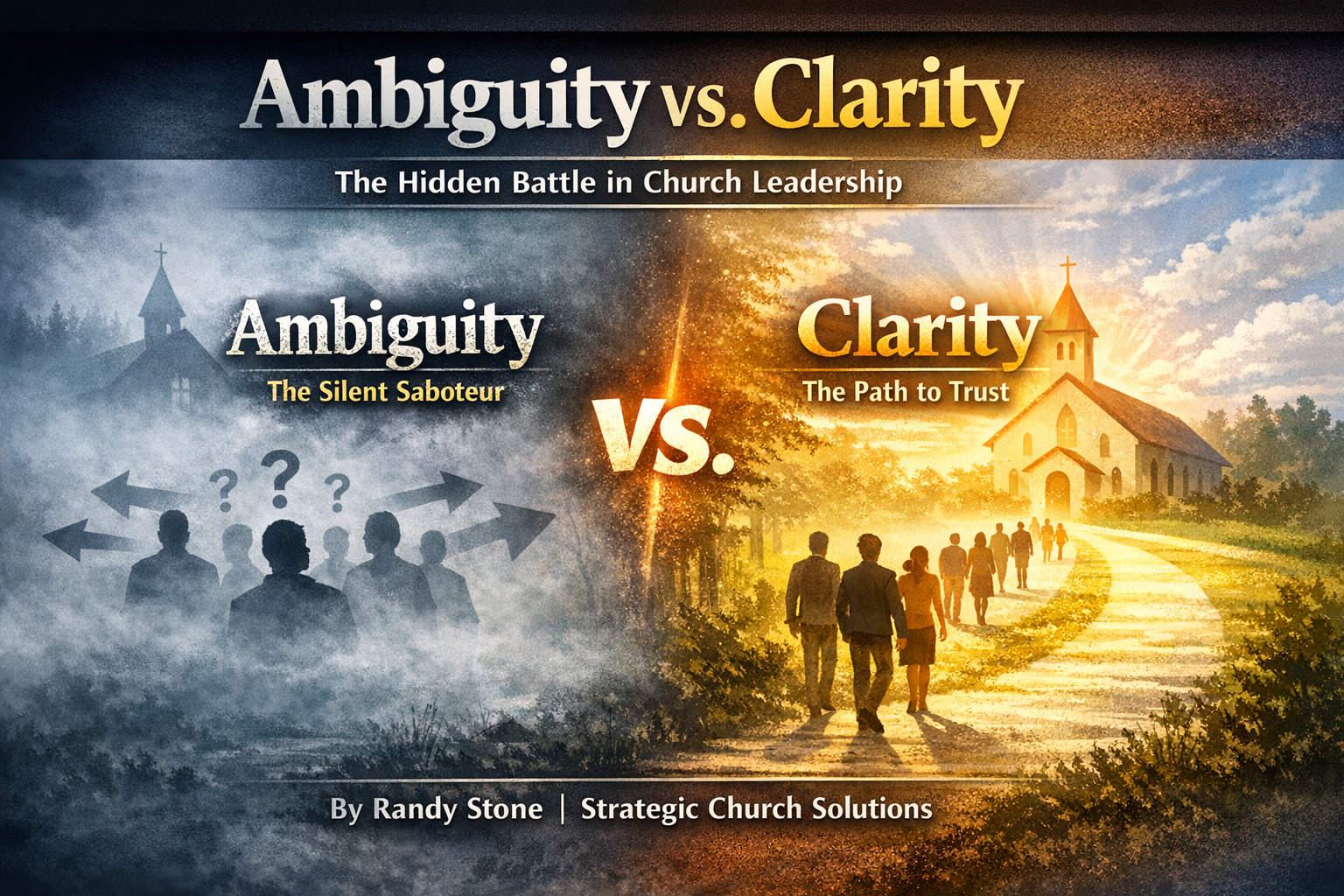
Ambiguity in church leadership leads to confusion, frustration, and animosity. See how clarity builds confidence, consistency, and unity.

Explore the danger of “asymptomatic Christianity” and why churches must move beyond belief alone to cultivate visible, obedient, life-changing faith in everyday living.

Learn why wise, timely, Spirit-led decisions are essential for healthy ministry leadership. Discover how decisions shape direction, strengthen organizational health, and move churches toward greater mission impact.

Many believers get stuck in “arrested development” when hurts, habits, and hang-ups derail growth. Discover a biblical path to healing, renewal, and maturity.
