
Micro Groups and a Discipleship Strategy
Randy Stone • December 31, 2025
Micro Groups and a Discipleship Strategy
Micro Groups and a Discipleship Strategy
Micro groups are an important part of a comprehensive Christian discipleship strategy. Micro-groups are small groups comprised of groups of three or four people usually of the same gender. The effectiveness of Micro groups can be attributed to several key factors:
1. Focused Relationships:
Micro-groups allow for deep, meaningful relationships to form among the participants. The small size fosters intimacy and accountability, which can lead to more effective spiritual growth and transformation. Close relationships make it easier to discuss personal struggles, pray for one another, and encourage each other in faith.
2. Personalized Attention:
With only three or four people in a group, everyone gets more personalized attention from others. This allows for more tailored guidance and support in their spiritual journey. Each member can receive direct feedback, mentoring, and encouragement, which can enhance their spiritual development and commitment.
3. Simplicity and Flexibility:
The micro-group model is simple. The format does not require extensive resources or complex structures, making it accessible and adaptable to diverse contexts. Micro-groups can adapt to various schedules and life situations. The small size allows for flexible meeting times and locations, making it easier for members to stay engaged and committed.
4. Replication and Multiplication Potential:
Members who have experienced growth through micro-groups are often motivated to start new ones. Micro-groups can be highly effective in multiplication because of their manageable size. When a group is ready to multiply, it can split into two pairs which can then add new members. Each member of the original group is encouraged and responsible for forming a new micro-group with others, leading to exponential growth. This model is scalable and can quickly increase the number of groups and disciples.
5. Accountability and Encouragement:
In micro-groups, members hold each other accountable and encourage each other in their spiritual practices. This accountability helps maintain commitment and fosters a supportive environment where individuals are motivated to live out their faith and disciple others.
6. Enhanced Leadership Development:
Micro-groups provide opportunities for leadership development within a small group setting. As members take turns leading discussions, praying, and providing support, they develop leadership skills that can be transferred to new groups and other ministry contexts.
7. Effective Use of Time:
The small size of micro-groups makes them efficient in terms of time and resources. Meetings can be shorter and more focused, allowing members to quickly address personal and spiritual needs without the logistical challenges of larger groups.
8. Nurturing a Discipleship Culture:
Micro-groups help instill a culture of discipleship within a community. As members experience the benefits of micro-group discipleship, they are likely to encourage others to participate and start their own groups, fostering a culture of multiplication and growth.
Overall, Micro-groups are essential parts of a comprehensive discipleship strategy because they contribute to building strong relationships, providing personalized support, and creating a replicable model for growth. This approach can contribute to rapid expansion and the development of a robust network of discipleship groups.

Generational Gap or Cultural Collision: Understanding Young Adults as a Culture Group

Every healthy church group needs a Connection Catalyst—someone who notices newcomers, follows up with the missing, and helps people move from attending to belonging.

Close-knit small groups can become closed-off when they stop welcoming new people. Learn how churches can protect warmth, openness, and mission in group life.

Close-knit groups are healthy until they become closed-off. Learn how churches can keep small groups open, mission-minded, and welcoming to new people.

Transactional ministry may attract people, but relational ministry helps churches make lasting disciples.

See how clear vision, values, and expectations help church leaders build confidence, unify teams, and create a culture of cooperation and collaboration.

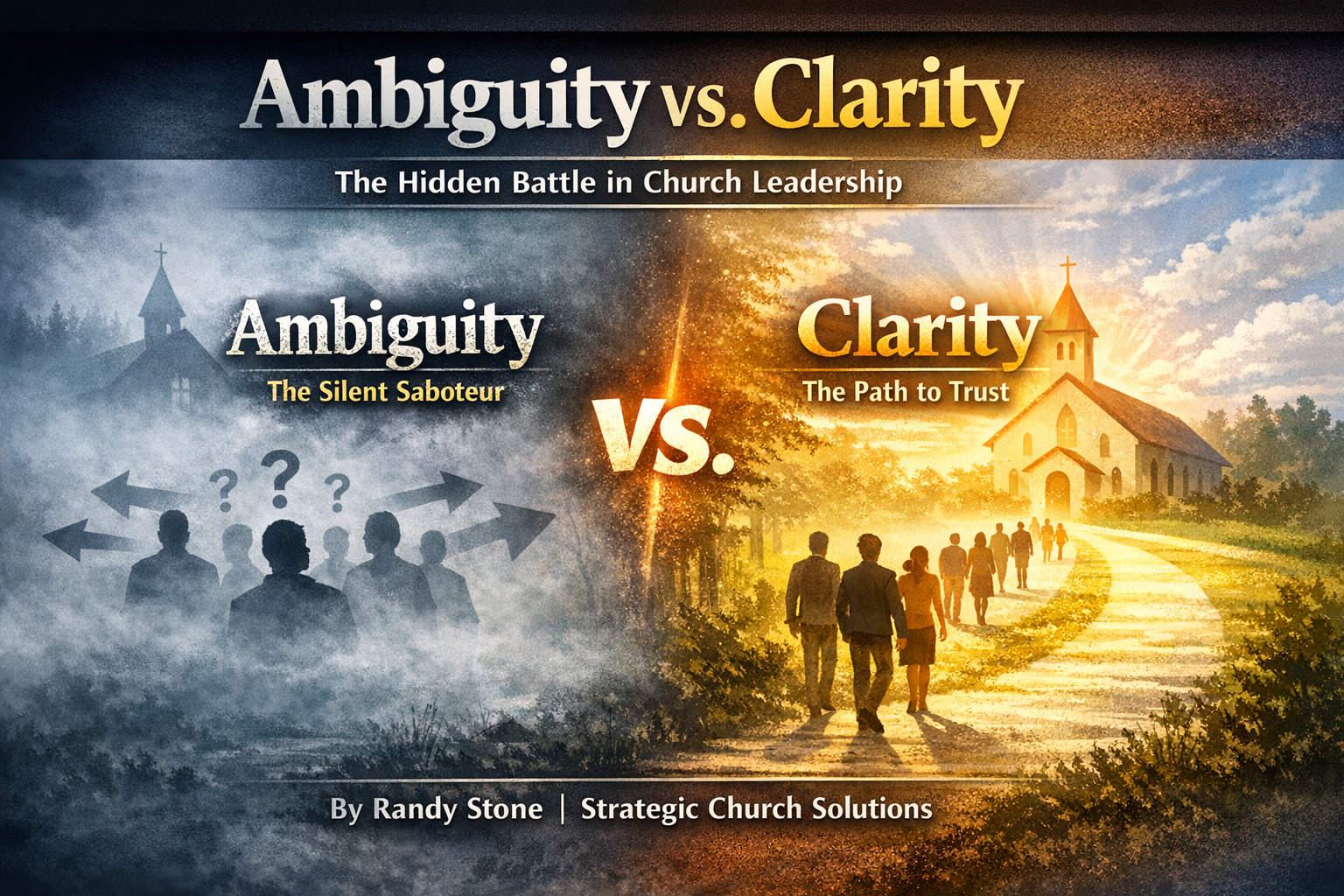
Ambiguity in church leadership leads to confusion, frustration, and animosity. See how clarity builds confidence, consistency, and unity.

Explore the danger of “asymptomatic Christianity” and why churches must move beyond belief alone to cultivate visible, obedient, life-changing faith in everyday living.

Learn why wise, timely, Spirit-led decisions are essential for healthy ministry leadership. Discover how decisions shape direction, strengthen organizational health, and move churches toward greater mission impact.
