
The Connection Catalyst:
Randy Stone • May 22, 2026
The Missing Role in Healthy Group Life

The “Connection Catalyst”: The Missing Role in Healthy Group Life
by Randy Stone, Lead Consultant and Coach, Strategic Church Solutions
If you’ve ever watched a small group, Sunday School class, or ministry team over time, you’ve probably seen this pattern:
• At first, there’s energy and excitement.• People show up regularly.• New folks visit and (maybe) stick.
Then slowly:
• Attendance becomes inconsistent.• Conversation gets shallow or dominated by a few voices.• New people slip in and out with little follow-up.• The group survives on the calendar, but not in real life.
What happened?
Often, the problem isn’t the curriculum, the leader’s teaching, or the group’s purpose. The problem is connection—or rather, the lack of someone who takes responsibility for cultivating and sustaining it.
That’s where a concept I like to call the “Connection Catalyst” becomes essential.
________________________________________
What Is a Connection Catalyst?
A Connection Catalyst is a person (or small team) whose primary ministry is to:
Intentionally build and maintain relational connections so that the group remains healthy, welcoming, and engaged over time.
They aren’t just “friendly people.” They are purposefully friendly, with eyes and heart tuned to:
• Notice who’s new• Notice who’s missing• Notice who’s on the fringes• Help turn “a group I attend” into “a community I belong to”
Think of them as the relational glue of group life.
In many churches, we assume the group leader or teacher will naturally fill this role. But the person who carries the main teaching responsibility often has their hands full:
• Preparing content• Managing time• Facilitating discussion• Handling logistics
Without help, “relational work” gets squeezed to the margins. Over time, the group’s relational temperature drops—even if the teaching remains solid.
A Connection Catalyst steps into that gap.
________________________________________
Why Connection Matters So Much
Before we talk about what a Connection Catalyst does, it’s worth asking: Why does connection matter this much?
Because:
• Spiritual growth is relational.God designed us to grow in community, not isolation. “One another” commands (love one another, bear one another’s burdens, encourage one another) can’t be obeyed from a distance.• Belonging precedes transformation for many people.Most people need to feel safe and known before they will open up about real struggles and questions.• Discipleship requires ongoing contact.
You don’t learn to follow Jesus in a vacuum. You learn as you walk with others—watching, imitating, asking, processing.
A group with weak connections might still meet, but it will struggle to:
• Retain new people• Facilitate honesty• Engage deeply with Scripture• Serve together
Connection is not optional. It’s the circulatory system of group life.
________________________________________
What a Connection Catalyst Actually Does
So what does this look like on the ground? Here are core functions of a Connection Catalyst for any class, group, or team.
1. Welcomes and Integrates New People
Instead of hoping newcomers “find their way,” a Connection Catalyst:
• Greets new people by name and introduces them around.• Helps them navigate practical things (where to sit, what to expect, how the group works).• Follows up after their first visit with a text, call, or message.• Connects them to others with similar life-stage or interests.
Their goal: No one visits twice without being known.
2. Monitors Attendance and Follows Up with Care
The Connection Catalyst quietly keeps an eye on:
• Who’s been absent for a few weeks• Who seems to be drifting to the edges• Who used to be engaged but has grown silent
Then they follow up—not as a hall monitor, but as a caring friend:
• “We missed you—everything okay?”• “How can we pray for you?”• “Want to grab coffee this week?”
Their goal: No one slips away unnoticed.
3. Creates Spaces for Relationships Beyond the Meeting
Group health doesn’t happen only during the scheduled hour. A Connection Catalyst helps create informal spaces like:
• Monthly lunches or dinners• Game nights, coffee meet-ups, or after-church hangouts• Service projects the group does together
These settings deepen friendships and build trust in ways a weekly study alone cannot.
Their goal: Move people from “we sit in the same room” to “we share life.”
4. Encourages Participation and “Shared Ownership”
Connection Catalysts help people move from consumers to contributors:
• Inviting quieter members into conversation: “Sam, what do you think about that?”• Helping people find ways to serve (snacks, prayer, communication, hosting, etc.).• Encouraging the group to pray for one another and support each other’s needs.
Their goal: Everyone feels like “this is my group,” not “their group.”
________________________________________
Why This Role Is Often Overlooked
If this is so valuable, why don’t more churches build it in intentionally?
A few reasons:
• We assume friendliness = connection.A room can feel friendly and still be deeply disconnected beneath the surface.• We over-function the teacher or leader.We expect one person to prepare content, lead discussion, track people, and nurture relationships. That’s a recipe for burnout.• We treat relationships as a by-product, not a ministry.We assume, “If we have a good study, relationships will take care of themselves.” Sometimes they do—for a while. Often they don’t.
Naming and empowering a Connection Catalyst is a way to say, “Relational health is a ministry worth stewarding.”
________________________________________
Who Makes a Good Connection Catalyst?
You’re not looking for a perfect extrovert or a professional counselor. A good Connection Catalyst typically has:
• A genuine love for people• Consistent reliability• A welcoming, approachable presence• Good listening skills more than a need to be the center of attention• A basic level of organization (to notice patterns and follow up)
Often, this person is already doing some of this informally. They just haven’t been named, equipped, and supported in the role.
________________________________________
How to Implement the Connection Catalyst Role in Your Church
Here are some steps for pastors, staff, and group leaders who want to put this into practice.
1. Cast the Vision
Explain to your groups:
• Why connection is critical to discipleship.• How this role will help sustain group health.• That this is not “one more thing,” but a way to share the load and improve care.
Help people see this role as spiritual ministry, not just “hospitality duty.”
2. Identify and Invite Potential Catalysts
Look for people in each group who already:
• Notice others• Arrive early and stay a little late• Seem to know what’s happening in people’s lives• Are trusted and respected
Invite them personally:
“You already do this so well. Would you consider serving our group as a Connection Catalyst?”
3. Give Clear, Simple Expectations
Provide a one-page description that includes:
• Purpose: “Help cultivate relationships and maintain group life.”• Core responsibilities: welcome new people, track absences, follow up, help create relational opportunities.• Time expectations: “A few touches each week outside group time.”
Simple and clear is better than complicated and fuzzy.
4. Equip and Encourage Them
Offer:
• Basic training: how to follow up without being pushy, how to listen well, how to handle sensitive situations.• Regular check-ins: “What are you seeing? Any concerns? Any stories we can celebrate?”• Appreciation: public thanks, notes of encouragement, and visible support.
Remember: Connection Catalysts need connection too.
5. Celebrate Wins
Share stories like:
• “Because someone followed up, they returned and are now fully engaged.”• “Our group rallied around a member going through surgery.”• “A newcomer said, ‘I felt at home the first day.’”
Stories reinforce the value of the role and inspire others.
________________________________________
The Outcome: Groups That Actually Feel Like Body Life
When Connection Catalysts are active and supported, groups begin to look more like the New Testament vision of the church:
• People are known, not just counted.• Needs are noticed and met.• Newcomers move from visitors to family.• Strugglers don’t disappear unseen.• Teaching takes root in relationships that can support real change.
In a culture where isolation and superficiality are normal, groups with healthy connection become a countercultural witness:
“By this everyone will know that you are My disciples, if you love one another.”
A Connection Catalyst doesn’t manufacture love.
But they do something crucial:
They tilt the environment toward connection, care, and shared life—so that love has a place to land and grow.
For churches serious about making disciples and sustaining group life, this role isn’t optional. It’s strategic.
And in many cases, the person God wants to use as a Connection Catalyst is already in your room—just waiting to be invited, named, and empowered for the ministry they were quietly doing all along.

Close-knit small groups can become closed-off when they stop welcoming new people. Learn how churches can protect warmth, openness, and mission in group life.

Close-knit groups are healthy until they become closed-off. Learn how churches can keep small groups open, mission-minded, and welcoming to new people.

Transactional ministry may attract people, but relational ministry helps churches make lasting disciples.

See how clear vision, values, and expectations help church leaders build confidence, unify teams, and create a culture of cooperation and collaboration.

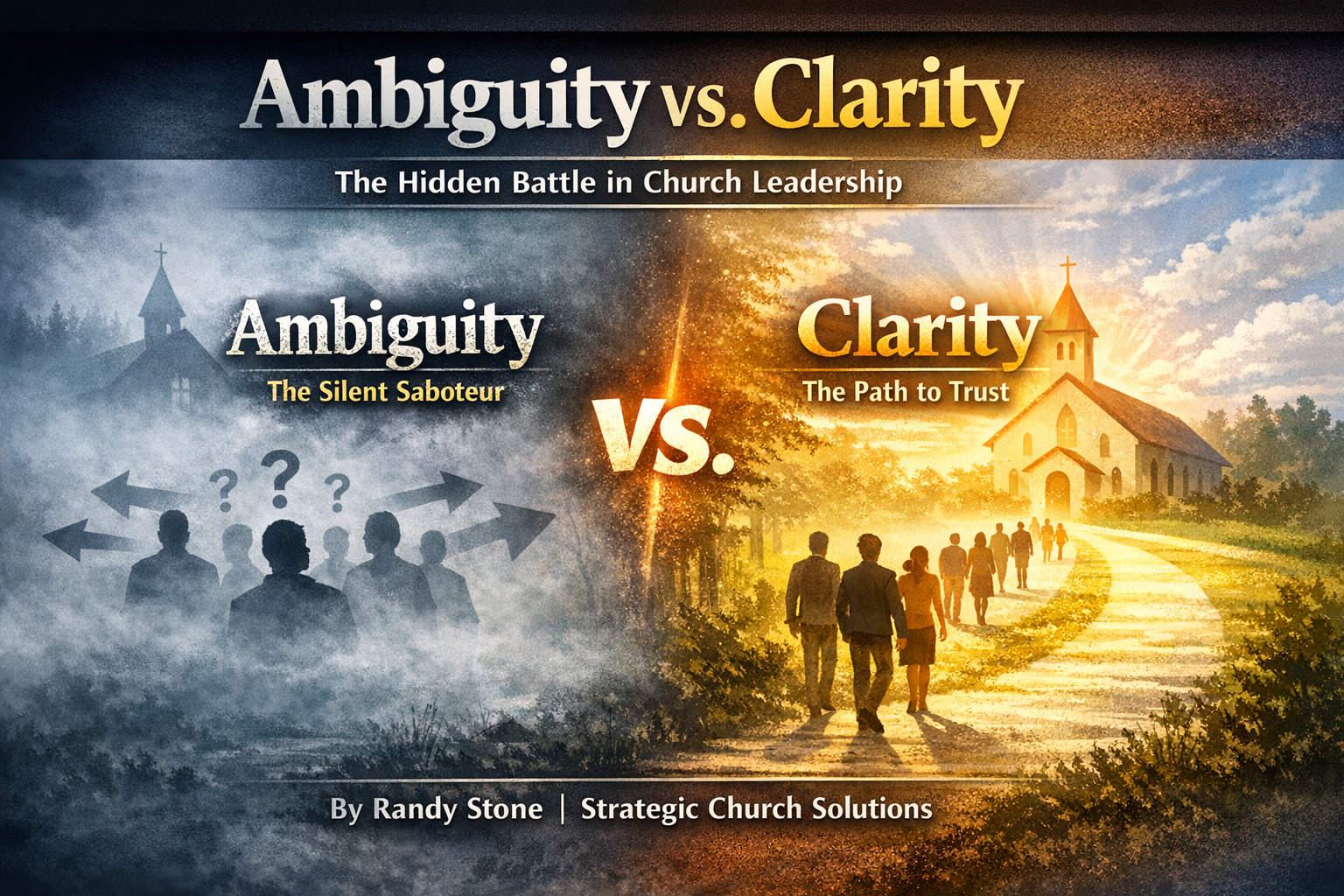
Ambiguity in church leadership leads to confusion, frustration, and animosity. See how clarity builds confidence, consistency, and unity.

Explore the danger of “asymptomatic Christianity” and why churches must move beyond belief alone to cultivate visible, obedient, life-changing faith in everyday living.

Learn why wise, timely, Spirit-led decisions are essential for healthy ministry leadership. Discover how decisions shape direction, strengthen organizational health, and move churches toward greater mission impact.

Many believers get stuck in “arrested development” when hurts, habits, and hang-ups derail growth. Discover a biblical path to healing, renewal, and maturity.

When ministry plans stall or shift, God may be forming your church through divine delays and detours. Learn how leaders respond with faith and clarity.
